Text
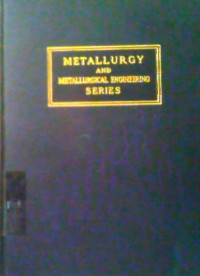
METALLURGY AND METALLURGICAL ENGINEERING SERIES
This book is designed to suit the needs of the senior and graduate metallurgist in acguainting him with the fundamentals of the physical chemistry and the thermodynamics of metals and metallurgical processes. The thermodynamic method is particularly stressed, as it is felt that thermodynamics has more to offer metallurgy than has been commonly realized. In spite of the considerable number of texts on chemical thermodynamics now available, none seems particularly well suited to the needs of the student metallurgist. This statement may appear rather odd if one takes the viewpoint that thermodynamics is thermodynamics. However, rather pronounced differences, not only subjectively but experimentally, set off the substances of metallurgical interest from those (particularly aqueous solutions) which are traditionally of interest to the physical chemist. Only recently has a physical chemistry of the metallic state begun to develop. In this book the attempt is made to include this physical chemistry in simple terms and to present the fundamentals of chemical thermodynamics so that the student may be able to understand the thermodynamic method and apply it to metallurgical problems.
It is also hoped that this book may serve as a useful reference. The first portion summarizes modern views on the chemistry of the metallic state and briefly sketches the chemistry of other states with which the metallurgist must perforce deal. The later portions deal with thermodynamics, the treatment being mostly in the classical manner but with metallurgical applications and limitations always in mind. The sections on heterogeneous equilibrium discuss in some detail phases of variable composition, since these are commonplace at elevated temperature, particularly in metallurgical systems. This treatment, though following substantially that of Gibbs, is more detailed than that in most elementary texts. The chapters on the thermodynamics of the iron-carbon and iron-nitrogen systems are belicved more comprehensive than can be found in the present literature. Although a large share of this book is devoted to the treatment of equilibrium, an introduction to reaction-rate phenomena in the final chapters serves at least as token acknowledgment of the great importance of this rapidly growing field.
Ketersediaan
Informasi Detail
- Judul Seri
-
-
- No. Panggil
-
669.92 LAW m
- Penerbit
- USA : MCGraw-Hill Book., 1953
- Deskripsi Fisik
-
IX; 535hlm; 23cm
- Bahasa
-
English
- ISBN/ISSN
-
52-8315
- Klasifikasi
-
669.92
- Tipe Isi
-
-
- Tipe Media
-
-
- Tipe Pembawa
-
-
- Edisi
-
-
- Subjek
-
-
- Info Detail Spesifik
-
-
- Pernyataan Tanggungjawab
-
Lawrece S. Darken
Versi lain/terkait
Tidak tersedia versi lain
Lampiran Berkas
Komentar
Anda harus masuk sebelum memberikan komentar























 Karya Umum
  Filsafat
  Agama
Agama  Ilmu-ilmu Sosial
  Bahasa
  Ilmu-ilmu Murni
  Ilmu-ilmu Terapan
  Kesenian, Hiburan, dan Olahraga
  Kesusastraan
  Geografi dan Sejarah