Text
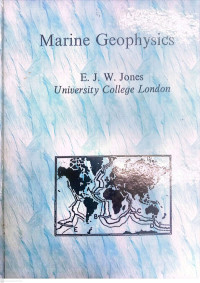
Marine Geophysics
Exploration of the oceans using the tcchnigues of the geophysicist has had a profound influence on our understanding of the Earth and its behaviour through time. Observations in the deep occan-have played a key role in establishing modern plate tectonic theory, transforming Earth Science in ways that were guite unexpected when the first geophysicists put to sea. Measurements in shallower waters have revealed how continental margins form, subside and become covered with sedimentary accumulations. The remarkable structural details revealed by seismic and other methods in these regions make geophysics an indispensable tool in the search for petroleum and other natural resources. After a long period of exciting developments, it is now appropriate to review what geophysics can tell us about the structure of the seabed and the ways in which the oceans and their margins have evolved. Rapid progress in marine geophysics, as in other branches of science, has been closely linked to advances in technology. The first part of this volume therefore focuses on the instruments and methods for making geophysical observations at sea. The means of accurately locating sensors and mapping seabed topography are essential for investigations of the solid Earth. Following an introductory chapter, these topics are considered in Chapters 2 and 3. I then discuss the powerful seismic technigues for imaging the Earth's interior. Chapters 6-10 examine the gravity and magnetic fields over the oceans, heat loss from the sea floor, together with electrical and radiometric methods for studying submarine geology. Geophysical measurements in offshore boreholes are reviewed in Chapter 11. Wide-ranging observations are brought together in later chapters on the structure and evolution of the deep sea floor, continental margins and areas where lithospheric plates converge. On completing each section I have been keenly aware of field studies and develOopments in instrumentation and data analysis that receive only scant mention or have had to be omitted altogether in order to keep the book to a manageable size. To provide some compensation for the action of information filters the reader is directed to further literature which is not citcd in the main text. This volume has bccen shapced by my contact with numerous gecophysicists, gcuologists, enginecrs and graduate students. I have had the privilege of working with many aboard ships, large and small, from the Arctic to cguatorial waters. To all of my seca-going and land-bascd colleagues, I extend my warmest thanks for cxpanding my scientific horizons. I am particularlv grateful to John Ewing, Tony Laughton, Manik Talwani, Joe Worzel and the late Maurice Ewing, Maurice Hill and Drummond Matthews for their inspiring leadership and unstinting support of marine geophysics at a formative time. While preparing the manuscript, I received assistance in many forms from colleagues near and far. At University College London, Arthur Allan, Paul Cross, Desmond Donovan, Ian Dowman, John Iliffe, Minoo Patel and Eric Robinson gave freely of their time in discussion and found many publications I would have otherwise missed. Don Davis, John Humberston, John McKenzie and Tony Smith clarified some of the basic physics of geophysics. Gleb Udintsev of the V.I. Vernadsky Institute, Moscow, was an invaluable guide to the deep sea. Industrial groups have provided advice. illustrations and unpublished reports. Peter Bibby of Western Geophysical, London, and Nigel Deeks of Schlumberger GeoOuest generously helped with the chapter on seismic acguisition. Authors of research papers have kindly supplied copies of diagrams for reproduction. Janet Baker, Elizabeth Bolton, Scott Cooper, Michael Ives, Barry King, the late Adrian Lloyd, Gillian Nash, Roy Palmer, Owen Pesrrson, Colin Stuart, Alan Watkins and Pauline Whitehead helped with drafting many other illustrations. I am indebted to the reviewer of the original manuscript who made many suggestions for improving the text. My thanks are due to Sally Wilkinson, Mandy Collison, Louise Portsmouth and their colleagues at John Wiley for bringing the book to completion and to Sue Worrall for her thoroughness during the editing stages.
Ketersediaan
Informasi Detail
- Judul Seri
-
-
- No. Panggil
-
551.46 JON m
- Penerbit
- USA : John Wiley & Sons., 1999
- Deskripsi Fisik
-
viii, 466 hlm.; 26 cm
- Bahasa
-
English
- ISBN/ISSN
-
0-471-98694-1
- Klasifikasi
-
551.46
- Tipe Isi
-
-
- Tipe Media
-
-
- Tipe Pembawa
-
-
- Edisi
-
-
- Subjek
- Info Detail Spesifik
-
-
- Pernyataan Tanggungjawab
-
E.J.W. Jones
Versi lain/terkait
Tidak tersedia versi lain
Lampiran Berkas
Komentar
Anda harus masuk sebelum memberikan komentar























 Karya Umum
  Filsafat
  Agama
Agama  Ilmu-ilmu Sosial
  Bahasa
  Ilmu-ilmu Murni
  Ilmu-ilmu Terapan
  Kesenian, Hiburan, dan Olahraga
  Kesusastraan
  Geografi dan Sejarah